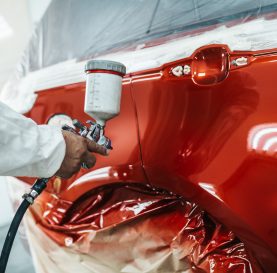
Chips, nicks, and light scratches can make your vehicle look worn before its time. With a little prep and a can of colour-matched aerosol paint, you can make those minor imperfections disappear.
Here’s how to do it properly, without making a bigger mess than you started with.
What You’ll Need:
- Colour-matched aerosol paint
- Clearcoat (optional but recommended)
- Sandpaper (320 and 600 grit)
- Masking tape and paper
- Wax and grease remover
- Microfibre cloth
- Primer (for exposed metal or deeper scratches)
- Wax and grease remover
Step 1:
Clean the Area
Start by washing the damaged area with soap and water, then wipe it down with wax and grease remover, drying it off with another clean cloth. Any leftover oils or debris can affect how the paint adheres.
Step 2:
Sand and Feather
Use 320-grit sandpaper to lightly sand the chip or scratch. Your goal is to remove any loose paint and smooth the edges so they feather into the surrounding surface. If bare metal is exposed, apply a couple of thin coast of primer before moving on.
Let the primer dry completely, approximately 12-24 hours, and then sand it smooth with 600 grit sandpaper. Wipe the area with a tack cloth.
Step 3:
Mask Surrounding Panels
Use automotive tape and masking paper (or plastic) to protect nearby areas. Even though you’re working on a small spot, aerosol paint travels—and overspray can stick where you don’t want it.
Step 4:
Shake and Spray
Shake your aerosol can thoroughly—at least 2 minutes after the mixing ball starts rattling. Hold the can about 6–8 inches away and apply light, even coats. Start spraying slightly before the area and continue slightly past it to avoid heavy build-up.
Apply 2–3 medium coats, waiting 20 minutes between each coat.
Step 5:
Apply Clearcoat (Optional but Ideal)
Once the colour has dried, approximately 30 minutes, apply a clearcoat using the same method—medium, even coats with proper flash time between them. Clearcoat adds gloss and helps protect the repair from UV fading and wear.
Step 6:
Blend and Finish
Let the area cure fully (usually 30 days). If the repair stands out too much, you can lightly wet sand with ultra-fine paper (1500–2000 grit) and then polish it to blend it more seamlessly with the surrounding paint.
It’s All About the Prep
A good touch-up job is less about how steady your hand is—and more about taking your time with prep, sanding, and layering. With the right approach, even first-timers can get impressive results.
Let Autohome Colour-Match It for You
Bring your paint code or vehicle in for matching to Autohome and we’ll mix a custom-matched aerosol that’s perfect for your vehicle. Whether it’s a deep scratch or just a few chips, we’ve got the primers, clearcoats, and advice to help you do it right the first time.

Need Some Help With Your Project?
Have questions or looking for some advice? Our team is ready to help answer your questions today.