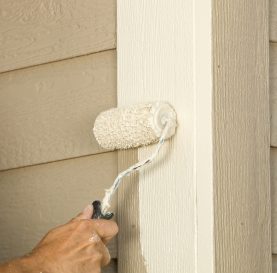
Want a high-impact, low-cost refresh? Painting your cabinets or doors can completely transform the look of a kitchen or bathroom. But because these surfaces are handled daily, proper prep and durable products are key to getting results that last.
Here’s how to do it right.
What You’ll Need:
- Degreaser or TSP substitute
- Sandpaper (120–220 grit)
- Tack cloth or microfibre cloth
- Painter’s tape
- Drop cloths
- Screwdriver or drill (for removing hardware)
- Bonding primer
- Cabinet and door paint (latex or enamel)
- Low nap roller, angled sash brush, or paint sprayer
Step 1:
Remove Doors and Hardware
Take off all doors, drawers, handles, knobs, and hinges. Label everything as you go (a small piece of masking tape with a number works well), so reassembly is easy later on.
Place doors flat on a drop cloth or work surface for easier painting.
Step 2:
Clean Thoroughly
Use a degreaser to remove built-up grime, especially around handles and high-touch areas. Kitchen cabinets in particular may have layers of oil or residue that regular soap won’t fully cut through.
Rinse with clean water and allow to dry completely.
Step 3:
Sand the Surface
Lightly sand all surfaces you plan to paint. The goal is to dull the finish and help the primer stick—not to remove every bit of old paint.
After sanding, use a tack cloth to remove all dust, visible and not visible.
Step 4:
Tape Off and Protect
Use painter’s tape to protect surrounding walls, floors, or countertops. If you’re painting in place, tape off adjacent areas around doors or cabinet frames.
Step 5:
Prime the Surface
Apply a bonding primer using a low nap roller or brush. This step is especially important for glossy or laminate surfaces, as it helps the paint grip and resist peeling.
Let the primer dry completely (check the label—typically overnight) and give it a light sand before painting with P240 grit sandpaper. Vacuum and tack the cabinet faces again to remove all of the dust residue.
Step 6:
Apply the Paint
Use a low nap roller for large flat areas, and a brush or sprayer for edges and trim. Apply two light coats, allowing each coat to dry thoroughly before applying the next.
Pro Tip: Don’t overload your brush or roller—multiple thin coats will give you a smoother, more durable finish than one heavy coat.
Step 7:
Let It Cure and Reassemble
Let the paint cure for at least 24 hours before reinstalling doors and hardware. The longer you wait, the harder the finish will be—some cabinet paints take up to 7 days for a full cure.
A Big Change for a Small Investment
Freshly painted doors and cabinets can make an entire room feel brand new. With the right prep and products, your DIY job can rival a professional finish.
Ask Autohome What Paint Holds Up Best
At Autohome, we stock durable cabinet paints designed to handle real life—plus bonding primers, rollers, and sprayers for a smooth finish. Stop by and tell us what you’re working on—we’ll help you pick the right products for the job.

Need help choosing a paint colour?
Our complimentary in-home consultations will help you choose a colour that brings your vision to life!